
Contents
- 1 Introduction: The World Has Entered a New Discovery Era
- 2 What Is Personal Branding?
- 3 Why Personal Branding Matters More Than Ever
- 4 The Rise of AI-Powered Discovery
- 5 From Search Engines to Answer Engines
- 6 Why Expertise Alone Is No Longer Enough
- 7 The Four Pillars of Personal Branding
- 8 Why Personal Branding Is a Career Asset
- 9 The New Professional Resume
- 10 Content Is the Engine of Personal Branding
- 11 Why Educational Content Wins
- 12 The Power of Specialization
- 13 Why LinkedIn Matters More Than Ever
- 14 Building a Personal Website
- 15 AI Is Changing How Experts Are Discovered
- 16 What AI Looks For Before Recommending Someone
- 17 Understanding GEO
- 18 SEO vs GEO vs AEO
- 19 Why Thought Leadership Matters
- 20 The Content Flywheel Strategy
- 21 Why Case Studies Build Trust Faster
- 22 Building a Personal Brand From Scratch
- 23 Common Personal Branding Mistakes
- 24 Why Authenticity Matters More in the AI Era
- 25 Personal Branding for Freelancers
- 26 Personal Branding for an AI Digital Marketing Freelancer in Chennai
- 27 The Long-Term Value of Personal Branding
- 28 Reputation Is the Ultimate Competitive Advantage
- 29 The Future of Personal Branding
- 30 Real-World Examples of Strong Personal Brands
- 31 What Makes a Personal Brand Memorable?
- 32 The Content Ecosystem Approach
- 33 Why Long-Form Content Is Making a Comeback
- 34 How to Measure Personal Branding Success
- 35 The Compounding Effect of Personal Branding
- 36 Why Consistency Beats Perfection
- 37 The Relationship Between Personal Branding and Business Growth
- 38 The Future of Search and Personal Branding
- 39 Why AI Cannot Replace Personal Experience
- 40 Personal Branding Trends for 2030
- 41 The Opportunity Most Professionals Miss
- 42 Final Thoughts
- 43 Frequently Asked Questions
- 43.1 What is personal branding in simple words?
- 43.2 Why is personal branding important in the AI era?
- 43.3 How long does it take to build a personal brand?
- 43.4 Which platform is best for personal branding?
- 43.5 Is personal branding only for entrepreneurs?
- 43.6 What type of content works best?
- 43.7 How does personal branding help freelancers?
- 43.8 What is GEO?
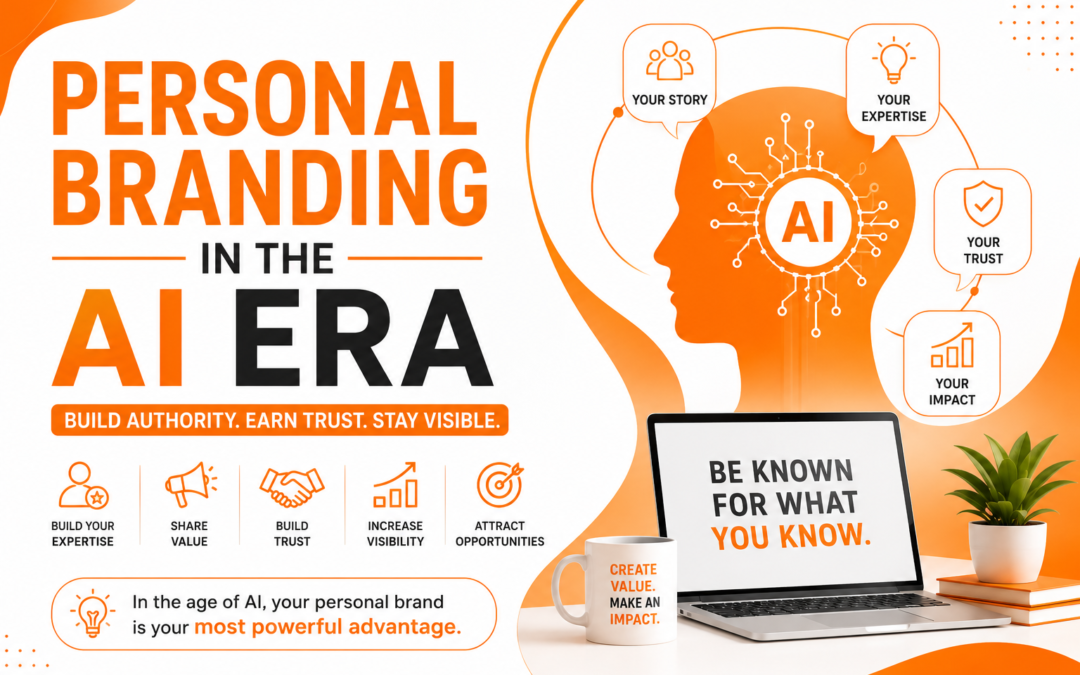
How Professionals Can Build Authority, Trust, and Visibility in an AI-Driven World
Personal branding in the AI era is the process of building trust, authority, and visibility online so people and AI-powered platforms can recognize your expertise. As search evolves from Google links to AI-generated answers, professionals who consistently share knowledge, demonstrate experience, and create value are more likely to be discovered, trusted, and recommended. Whether you are an entrepreneur, consultant, executive, creator, or AI Digital Marketing Freelancer in Chennai, personal branding has become one of the most important assets for long-term growth.
Introduction: The World Has Entered a New Discovery Era
For decades, expertise alone was enough.
If you were good at your job, people eventually noticed.
Referrals came naturally.
Opportunities arrived through networking.
Reputation spread through word of mouth.
Today, the rules are different.
Before someone hires you, partners with you, invests in your company, or follows your advice, they often search for you online.
They may check:
- YouTube
- Industry websites
- ChatGPT
- Gemini
- Perplexity
- Social media platforms
Your online presence becomes your first impression.
In many cases, people decide whether they trust you before they ever speak with you.
This shift has made personal branding one of the most valuable professional assets in the modern world.
What Is Personal Branding?
Personal branding is not about becoming famous.
It is not about gaining millions of followers.
It is not about constantly talking about yourself.
Personal branding is the process of becoming known for something valuable.
It is the reputation people associate with your name.
When someone hears your name, what do they think about?
That answer is your personal brand.
For example:
- Warren Buffett is associated with investing.
- Simon Sinek is associated with leadership.
- Seth Godin is associated with marketing.
- Naval Ravikant is associated with startups and wealth creation.
Each of these individuals built a strong association with a specific topic.
That association became their brand.
The same principle applies to every professional.
Why Personal Branding Matters More Than Ever
The internet has created unlimited access to information.
People can learn almost anything with a few clicks.
As a result, information itself is no longer rare.
Attention is rare.
Trust is rare.
Credibility is rare.
This means professionals must compete not only on expertise but also on visibility and trust.
The people who consistently demonstrate knowledge often gain more opportunities than equally skilled professionals who remain invisible.
This does not mean visibility is more important than expertise.
It means expertise without visibility has limited impact.
The Rise of AI-Powered Discovery
The biggest change happening today is not social media.
It is not search engines.
It is artificial intelligence.
Millions of people now use AI platforms to find answers.
Instead of searching:
“Best marketing strategy for a startup”
People ask:
“What marketing strategy should a startup use in 2026?”
Instead of searching:
“Top digital marketing experts”
People ask:
“Who are the most trusted digital marketing professionals?”
AI systems increasingly influence discovery.
This means people are no longer competing only for rankings.
They are competing for trust and authority.
From Search Engines to Answer Engines
Traditional search engines showed links.
AI systems provide answers.
This changes everything.
In the old model:
Search → Click → Website → Information
In the new model:
Question → AI Answer → Decision
If AI systems increasingly influence recommendations, being recognized as a trusted source becomes critical.
This is where personal branding plays a major role.
Why Expertise Alone Is No Longer Enough
Imagine two professionals.
Professional A has twenty years of experience.
Professional B has ten years of experience but consistently shares insights online.
Who receives more visibility?
Who attracts more inquiries?
Who gets invited to events?
Who becomes memorable?
In many cases, Professional B.
Not because they are more knowledgeable.
Because people know they exist.
Visibility amplifies expertise.
Without visibility, even extraordinary knowledge can remain hidden.
The Four Pillars of Personal Branding
Every strong personal brand is built on four foundations.
1. Expertise
People need a reason to trust you.
Developing expertise requires:
- Learning
- Experience
- Practice
- Problem solving
Expertise forms the foundation of credibility.
Without expertise, personal branding becomes empty promotion.
2. Visibility
Visibility means showing up where your audience spends time.
Examples include:
- Blogs
- Podcasts
- Videos
- Industry publications
- Conferences
Visibility creates awareness.
Awareness creates opportunities.
3. Consistency
One article does not build authority.
One social media post does not create a reputation.
Consistency is what transforms occasional content into a recognizable brand.
Authority compounds over time.
4. Trust
Trust is the most valuable component.
People buy from people they trust.
People hire people they trust.
People recommend people they trust.
Trust is built through:
- Transparency
- Authenticity
- Experience
- Reliability
Without trust, visibility creates attention but not influence.
Why Personal Branding Is a Career Asset
Many professionals think personal branding is only for entrepreneurs.
This is no longer true.
Personal branding benefits:
- Employees
- Consultants
- Freelancers
- Founders
- Executives
- Coaches
- Creators
A strong personal brand can create:
- Job opportunities
- Consulting projects
- Speaking engagements
- Business partnerships
- Media exposure
Your reputation becomes an asset that works even when you are not actively promoting yourself.
The New Professional Resume
Traditional resumes tell people what you have done.
Personal branding shows people what you know.
This distinction matters.
Employers increasingly research candidates online.
Clients investigate expertise before making decisions.
Investors evaluate founders through their digital presence.
Your content often becomes your modern resume.
Content Is the Engine of Personal Branding
Content is how expertise becomes visible.
Without content, people cannot easily understand your knowledge.
Content can take many forms:
- Blog posts
- LinkedIn articles
- Videos
- Podcasts
- Interviews
- Webinars
- Newsletters
Every piece of content contributes to your professional reputation.
The goal is not quantity.
The goal is usefulness.
Why Educational Content Wins
The strongest personal brands focus on helping people.
They teach.
They simplify.
They explain.
They solve problems.
Educational content creates trust because it provides immediate value.
People remember those who help them understand something.
This is one reason educational creators often build authority faster than promotional creators.
The Power of Specialization
One of the biggest personal branding mistakes is trying to appeal to everyone.
Strong brands are clear.
People should know exactly what you stand for.
Examples:
- Leadership
- Investing
- Artificial Intelligence
- Marketing
- Personal Finance
- Entrepreneurship
The narrower your expertise, the easier it becomes to build authority.
The broader your message, the harder it becomes to be remembered.
Why LinkedIn Matters More Than Ever
LinkedIn has become one of the most powerful platforms for professional visibility.
Unlike many social platforms, LinkedIn connects expertise with opportunity.
Decision-makers are active there.
Recruiters are active there.
Business owners are active there.
Investors are active there.
A consistent LinkedIn presence can significantly strengthen a personal brand.
Building a Personal Website
Social media is important.
But it should not be your only asset.
Platforms change.
Algorithms change.
Rules change.
A personal website gives you control.
It acts as:
- Your digital headquarters
- Your portfolio
- Your content library
- Your authority hub
Professionals serious about long-term branding should invest in a website.
AI Is Changing How Experts Are Discovered
For years, Google was the primary gateway to information.
If someone wanted to find an expert, they searched online and reviewed websites.
Today, AI platforms are becoming part of that discovery process.
Users increasingly ask questions such as:
- Who should I follow for marketing insights?
- What are the best resources to learn SEO?
- Who are the leading voices in artificial intelligence?
- Which experts explain investing in simple terms?
AI systems analyze information from across the web and generate recommendations.
This means personal branding is no longer only about human audiences.
It is also about becoming discoverable by AI systems.
What AI Looks For Before Recommending Someone
Although every AI platform works differently, strong recommendations often share common signals.
Consistent Expertise
Professionals who repeatedly discuss a topic create a clear knowledge signal.
Original Content
Unique insights carry more value than repeated opinions.
Credibility
Trustworthy sources are more likely to be referenced.
Authority
People who are cited, interviewed, quoted, or recognized often gain stronger visibility.
Digital Footprint
The broader your presence across trusted platforms, the easier it becomes to establish credibility.
This means personal branding is increasingly connected to discoverability.
Understanding GEO
A new discipline is emerging alongside traditional SEO.
It is called GEO.
Generative Engine Optimization.
SEO focuses on ranking in search results.
GEO focuses on becoming part of AI-generated answers.
The goal changes from:
“How do I rank higher?”
To:
“How do I become the source AI trusts?”
This shift may become one of the most important developments in digital marketing over the next decade.
SEO vs GEO vs AEO
Understanding the difference helps professionals prepare for the future.
SEO
Search Engine Optimization.
Goal:
Rank higher in search engines.
Focus:
Keywords, backlinks, technical optimization, content quality.
AEO
Answer Engine Optimization.
Goal:
Become the direct answer to questions.
Focus:
Featured snippets, structured content, FAQs, concise explanations.
GEO
Generative Engine Optimization.
Goal:
Become a trusted source for AI-generated responses.
Focus:
Authority, expertise, citations, trust signals, educational content.
The future belongs to professionals who understand all three.
Why Thought Leadership Matters
Thought leadership is often misunderstood.
It does not mean sharing opinions all day.
True thought leadership means contributing ideas that help people think differently.
Examples include:
- Unique frameworks
- Original observations
- Industry analysis
- Case studies
- Lessons learned
AI systems often prioritize content that adds value rather than simply repeating existing information.
Original thinking becomes an advantage.
The Content Flywheel Strategy
One of the biggest challenges in personal branding is consistency.
People run out of ideas.
The solution is building a content flywheel.
Start with one idea.
Repurpose it across multiple platforms.
Example:
One Blog Article
↓
LinkedIn Article
↓
Medium Post
↓
Quora Answer
↓
Instagram Carousel
↓
Newsletter
↓
Podcast Discussion
One idea becomes many assets.
The result is greater visibility without constantly creating new content.
Why Case Studies Build Trust Faster
Many professionals share advice.
Fewer share evidence.
Case studies bridge the gap between theory and reality.
Instead of saying:
“Content marketing works.”
Show:
- The challenge
- The strategy
- The implementation
- The outcome
Case studies demonstrate experience.
Experience strengthens trust.
Trust strengthens authority.
Building a Personal Brand From Scratch
Many professionals hesitate because they believe they are too late.
The reality is that most industries still have enormous opportunities.
Personal branding does not require a large audience.
It requires consistency.
Start with:
Step 1: Choose a Niche
Become known for one thing.
Step 2: Create Valuable Content
Answer common questions.
Practical insights outperform generic advice.
Step 4: Build a Website
Create a central hub for your expertise.
Step 5: Stay Consistent
Authority compounds over time.
Common Personal Branding Mistakes
Many professionals unintentionally slow their growth.
Trying to Appeal to Everyone
Broad messaging creates confusion.
Specificity creates authority.
Posting Without Purpose
Every piece of content should support a larger goal.
Inconsistency
Posting for two weeks and disappearing for three months makes authority difficult to build.
Copying Others
People follow authenticity.
Not imitation.
Ignoring Long-Form Content
Short-form content creates awareness.
Long-form content builds trust.
Both are important.
Why Authenticity Matters More in the AI Era
As AI-generated content becomes more common, authenticity becomes increasingly valuable.
People want:
- Real experiences
- Real lessons
- Real perspectives
Authenticity creates differentiation.
No AI system can replicate your lived experience.
Your experiences become part of your professional advantage.
Personal Branding for Freelancers
Freelancers often compete in crowded markets.
Personal branding helps reduce that competition.
Instead of competing on price, freelancers can compete on:
- Expertise
- Authority
- Reputation
- Trust
This creates stronger positioning and often leads to better opportunities.
Personal Branding for an AI Digital Marketing Freelancer in Chennai
An AI Digital Marketing Freelancer in Chennai can use personal branding to stand out in a highly competitive market.
Rather than simply promoting services, focus on:
Educational Content
Explain AI marketing concepts.
Case Studies
Show real results.
Industry Insights
Analyze trends and opportunities.
Thought Leadership
Share perspectives on the future of marketing.
Community Engagement
Participate in relevant discussions.
Over time, this builds authority.
Authority improves trust.
Trust attracts clients.
The Long-Term Value of Personal Branding
Unlike advertising, personal branding compounds.
An advertisement stops working when the budget ends.
A strong reputation continues creating opportunities.
Benefits often include:
- Higher trust
- Better leads
- Increased visibility
- Stronger credibility
- More referrals
Personal branding is one of the few professional assets that becomes more valuable over time.
Reputation Is the Ultimate Competitive Advantage
Technology changes.
Algorithms change.
Platforms change.
Trust remains.
The strongest personal brands focus on creating value rather than chasing attention.
When people trust your expertise, opportunities naturally follow.
The Future of Personal Branding
The next decade will likely reward professionals who are:
Visible
Easy to discover.
Helpful
Focused on creating value.
Credible
Trusted by audiences.
Consistent
Committed to long-term growth.
Authentic
Grounded in real experience.
These qualities are difficult to copy and increasingly valuable in an AI-driven world.
Building Authority That Lasts in a World of AI, Search, and Constant Change
Real-World Examples of Strong Personal Brands
One of the easiest ways to understand personal branding is to study people who have successfully built one.
These individuals are not known simply because they are experts.
They are known because they consistently share expertise.
Warren Buffett
Known for investing and long-term thinking.
Simon Sinek
Known for leadership and organizational culture.
Seth Godin
Known for marketing and business innovation.
Known for startups, wealth creation, and personal growth.
James Clear
Known for habits and personal development.
Each of these professionals built authority around a specific area of expertise.
Their names became associated with a topic.
That association is the foundation of personal branding.
What Makes a Personal Brand Memorable?
Many professionals publish content.
Few become memorable.
The difference often comes down to clarity.
People should be able to answer these questions quickly:
What do you do?
What do you stand for?
What expertise do you offer?
Why should people trust you?
The clearer these answers become, the stronger your personal brand becomes.
Confusion weakens authority.
Clarity strengthens it.
The Content Ecosystem Approach
Many people treat platforms independently.
That is a mistake.
The strongest personal brands operate as ecosystems.
Think of your content as interconnected assets.
Website
Your authority hub.
Professional visibility.
Medium
Long-form thought leadership.
Visual storytelling.
YouTube
Educational content.
Podcasts
Relationship building.
Newsletters
Direct audience ownership.
Each platform supports the others.
Together, they create a larger digital footprint.
Why Long-Form Content Is Making a Comeback
Short-form content dominates attention.
But long-form content builds trust.
A LinkedIn post may create awareness.
A detailed article demonstrates expertise.
A short video may attract attention.
A case study proves experience.
This is why blogs remain important.
Long-form content provides depth.
Depth creates credibility.
Credibility creates trust.
How to Measure Personal Branding Success
Many professionals focus on vanity metrics.
Examples include:
- Followers
- Likes
- Views
These metrics can be misleading.
The most important metrics often include:
Profile Visits
Are more people discovering you?
Website Traffic
Are people researching your expertise?
Inbound Opportunities
Are inquiries increasing?
Speaking Invitations
Are industry events noticing you?
Media Mentions
Are others referencing your work?
Direct Messages
Are meaningful conversations increasing?
These metrics reflect influence rather than popularity.
The Compounding Effect of Personal Branding
Personal branding works differently from most marketing activities.
Many marketing campaigns produce immediate results.
Personal branding often produces delayed results.
An article written today may generate opportunities years later.
A LinkedIn post may be forgotten tomorrow.
But hundreds of posts build authority.
Think of personal branding like investing.
Small contributions accumulate.
Over time, they create significant value.
Why Consistency Beats Perfection
Many professionals hesitate because they want every piece of content to be perfect.
Perfection slows progress.
Consistency builds momentum.
The market rarely rewards perfection.
It rewards persistence.
One useful article every week often outperforms ten articles published once and never repeated.
Consistency creates familiarity.
Familiarity creates trust.
Trust creates opportunities.
The Relationship Between Personal Branding and Business Growth
Strong personal brands often create stronger businesses.
People prefer working with experts they recognize.
This applies across industries.
Whether you are:
- A consultant
- A freelancer
- A financial educator
- A coach
- A startup founder
- A marketing professional
Personal branding can accelerate trust.
Trust often reduces the time required to make decisions.
When people already know your expertise, sales conversations become easier.
The Future of Search and Personal Branding
Search is evolving.
Users increasingly expect answers instead of links.
AI platforms continue to influence discovery.
This means professionals must think beyond rankings.
Future visibility will depend on:
Authority
Being recognized as an expert.
Expertise
Demonstrating deep knowledge.
Experience
Sharing real-world insights.
Trust
Building credibility over time.
These qualities align closely with Google’s E-E-A-T principles:
- Experience
- Expertise
- Authoritativeness
- Trustworthiness
The professionals who develop these qualities will remain visible regardless of platform changes.
Why AI Cannot Replace Personal Experience
Artificial intelligence can summarize information.
It can generate ideas.
It can organize knowledge.
What it cannot replace is your lived experience.
The lessons you learn.
The mistakes you make.
The insights you gain.
The results you achieve.
Experience creates perspective.
Perspective creates differentiation.
Differentiation creates authority.
Your experiences are among your most valuable branding assets.
Personal Branding Trends for 2030
Several trends are likely to shape the future.
Greater Importance of AI Visibility
Professionals will optimize not only for search engines but also for AI recommendations.
Increased Demand for Authenticity
People will seek genuine voices and real experiences.
Growth of Founder-Led Brands
Customers will increasingly trust people behind companies.
Expansion of Educational Content
Teaching will become one of the strongest trust-building strategies.
Stronger Focus on Reputation
Digital reputation will become increasingly important in professional decision-making.
These trends suggest personal branding will become even more valuable over time.
The Opportunity Most Professionals Miss
Many people believe personal branding is only for influencers.
That belief creates an opportunity.
Most professionals still underestimate the value of visibility.
They focus exclusively on skills.
Skills matter.
But visibility amplifies skills.
The combination of expertise and visibility often creates extraordinary outcomes.
The professionals who start building today may benefit for years to come.
Final Thoughts
The AI era is changing how people discover information.
It is changing how businesses attract customers.
It is changing how professionals build careers.
One thing remains constant.
People trust people.
People follow expertise.
People remember value.
Personal branding is not about becoming famous.
It is about becoming known for something meaningful.
The goal is not attention.
The goal is trust.
The goal is becoming the person people think of when they need help in a specific area.
Whether you are an entrepreneur, consultant, executive, creator, or AI Digital Marketing Freelancer in Chennai, the future belongs to professionals who combine expertise with visibility.
Because in a world where AI influences discovery, being known may become one of the most valuable assets you own.
Frequently Asked Questions
What is personal branding in simple words?
Personal branding is the process of building a reputation around your expertise, values, and knowledge so people recognize and trust you.
Why is personal branding important in the AI era?
AI platforms increasingly influence how people discover experts and businesses. A strong personal brand improves visibility and credibility.
How long does it take to build a personal brand?
Personal branding is a long-term process. Meaningful results often appear after several months of consistent effort.
Which platform is best for personal branding?
LinkedIn is one of the strongest platforms for professionals, but combining LinkedIn, a personal website, and long-form content creates better results.
Is personal branding only for entrepreneurs?
No. Employees, freelancers, consultants, executives, and business owners all benefit from personal branding.
What type of content works best?
Educational content, case studies, industry insights, practical lessons, and real-world experiences often perform best.
How does personal branding help freelancers?
It builds trust, demonstrates expertise, attracts leads, and reduces competition based solely on price.
What is GEO?
Generative Engine Optimization (GEO) focuses on increasing visibility in AI-generated responses and recommendations.